Most commercial lotions are water. That's not a metaphor. That's the ingredient list. And the skincare industry has been charging you premium prices for that water, plus a cocktail of synthetic emulsifiers, preservatives, and petroleum derivatives to hold it all together.
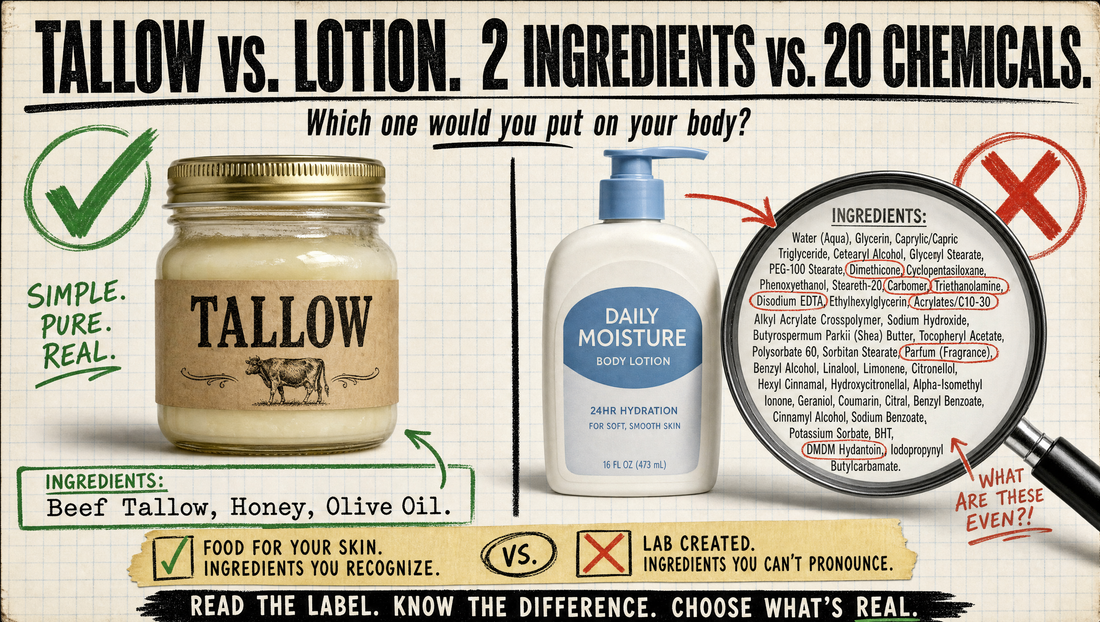
So when people ask about tallow vs lotion, here's the direct answer: beef tallow is a rendered animal fat made almost entirely of fatty acids that closely resemble your skin's own sebum. Commercial lotion is primarily water, thickened with synthetic polymers and stabilized with preservatives so it doesn't go rancid on the shelf. One works with your skin's surface. The other works around its own formulation problems. (Not the same thing.)
For the full breakdown of how tallow stacks up against every major alternative, visit our Tallow Comparisons and Buying Guide.
What Is Lotion, Actually?
Flip over almost any drugstore lotion and you'll see it: water (aqua) is ingredient number one. That's not an accident. Water is cheap. It also makes a product feel light and spreadable instantly on contact.
The problem? Water and oil don't mix. So formulators add emulsifiers to force them together. Then they add preservatives, because water-based products grow bacteria and mold fast. Then they add synthetic fragrance to cover the smell of all of it. Then they add thickeners so it doesn't pour out like milk.
By the time you're done, the "moisturizing" ingredient is buried under a pile of chemistry designed to solve problems the formula created for itself.
Some of those additives are fine. Some are worth knowing about. The point is: you're paying for infrastructure, not for skin-nourishing fat.
The water-evaporation problem
Here's something the industry doesn't advertise. When you apply a water-based lotion, the water evaporates. That's partly what creates the cooling, "refreshing" feeling people associate with lotion. But once the water leaves, what's left behind is a thin layer of whatever film-forming agents were in the formula. That's not hydration. That's a coating.
Your skin can feel softer immediately after application. But for people with very dry or sensitive-feeling skin, that sensation often fades faster than expected.
What Is Beef Tallow?
Beef tallow is rendered fat, traditionally from grass-fed cattle. Humans have been using it on their skin for centuries, long before the synthetic skincare era existed. It was a staple in homesteads, apothecaries, and kitchens across the world.
The reason it held that role for so long comes down to composition. Tallow is rich in:
- Oleic acid (similar to what's found naturally in human sebum)
- Palmitic acid (a fatty acid naturally present in skin)
- Stearic acid (conditions the skin's surface)
- Fat-soluble vitamins including A, D, E, and K, which occur naturally in grass-fed tallow
That fatty acid profile is why tallow is often described as resembling your skin's own natural oils. Your skin's surface recognizes these fats. It doesn't have to fight them.
No water. No emulsifiers needed to hold it together. No preservative system needed for a water phase. Just fat, doing what fat does: conditioning the skin's surface and helping it feel soft and nourished.
Is tallow right for everyone?
Honest answer: it depends on your skin. For people with dry, tight, or sensitive-feeling skin, tallow tends to be a favorite. The fatty acid profile is rich and the formula is simple, which many people with reactive skin prefer.
For people who are breakout-prone, the evidence is genuinely mixed. Oleic-acid-heavy oils can feel comedogenic for some skin types. If you're acne-prone and curious, patch testing is the smart move. We'd rather you know that upfront than be disappointed.
Tallow vs Lotion: The Side-by-Side
| Commercial Lotion | Whipped Beef Tallow | |
|---|---|---|
| Primary ingredient | Water | Grass-fed beef tallow |
| Emulsifiers needed? | Yes | No |
| Preservatives needed? | Yes (water phase) | Typically no |
| Fatty acid profile | Varies by formula | Oleic, palmitic, stearic |
| Fat-soluble vitamins | Added synthetically (if at all) | Naturally present |
| Feel on skin | Light, fast-absorbing, can feel watery | Rich, conditioning, a little goes a long way |
| Best for | Quick, everyday use, normal to oily skin | Dry, tight, sensitive-feeling skin |
Neither format is universally "better." But they are genuinely different products doing different things.
Why Whipped Changes Everything
Raw tallow is solid at room temperature. That's not a flaw. That's what fat does. But it does make application trickier, especially in winter.
Whipping tallow aerates it. The texture becomes lighter, creamier, and easier to spread without losing any of the fatty acid richness underneath. It's the same ingredient, optimized for the way real people actually use skincare.
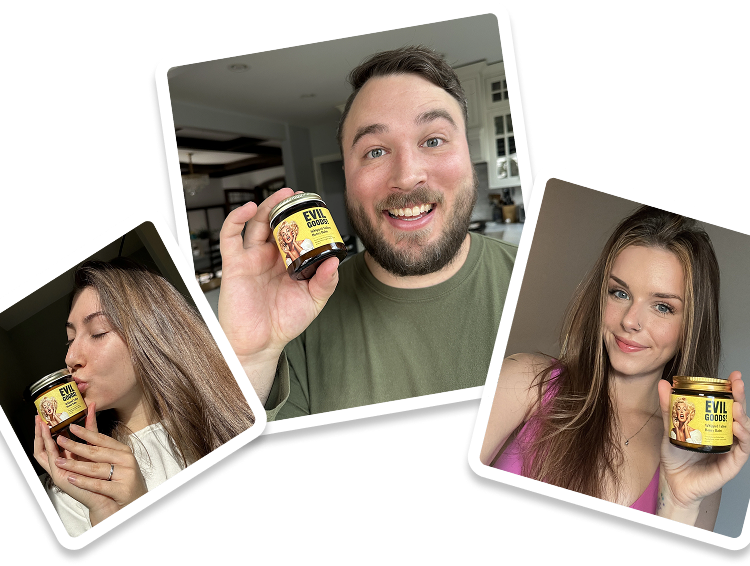
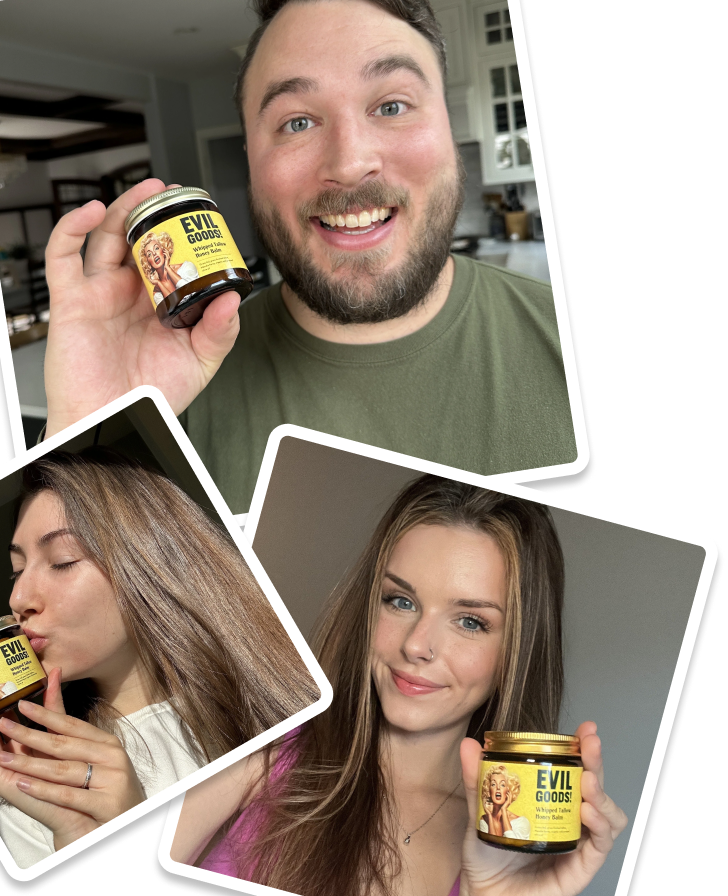
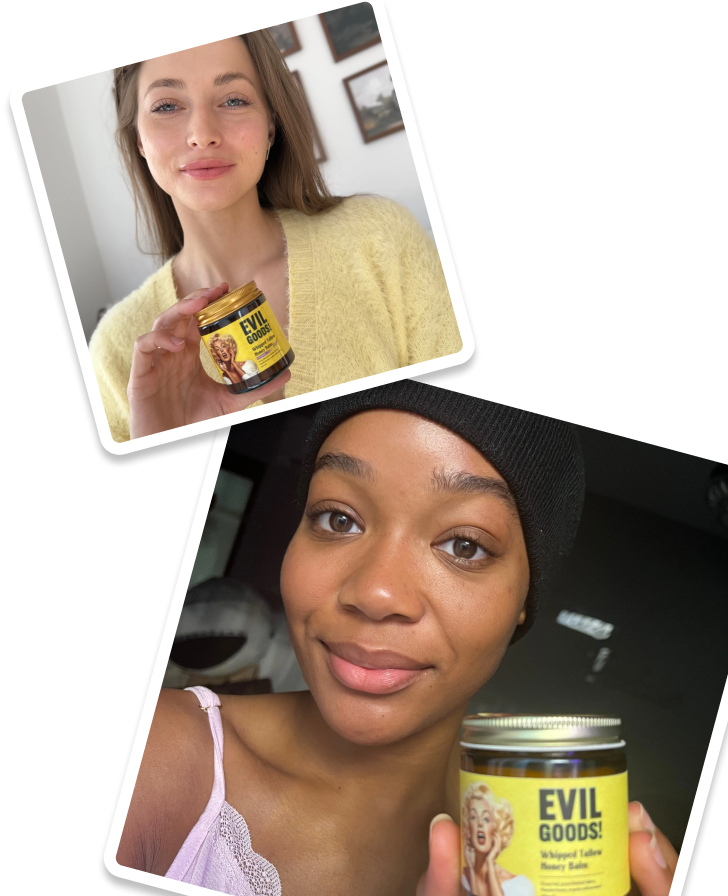
Our Whipped Beef Tallow and Honey Skin Cream pairs grass-fed tallow with raw honey, a humectant that helps the surface of your skin feel moisturized and comfortable. The result is a formula that feels indulgent without being greasy, and works without a single synthetic emulsifier or preservative system propping it up.
350,000 plus customers. 23,000 plus reviews. 4.9 stars.
Those aren't numbers we made up. That's what happens when a product actually does what it says.
And if you want to see how tallow compares to another classic alternative, read our post on tallow vs. petroleum jelly.
The Bottom Line
THE SKINCARE INDUSTRY IS LYING TO YOU about what moisturizing actually means. Selling you water and calling it nourishment isn't skincare. It's a business model.
Tallow is fat. Real, ancestral, biocompatible fat that mimics your skin's natural oils. Your skin's surface knows what to do with it.
If you've been chasing that "finally, something that works" feeling through lotion after lotion, it might be time to try something your great-grandmother would have recognized.
Ready to Make the Switch?
Try our Whipped Beef Tallow and Honey Skin Cream
One-time purchase or subscribe and save for the better deal. Either way, every order is backed by our 30-day money-back guarantee. No drama, no hoops. If your skin doesn't feel the difference, we'll make it right.

Dr. Elena Dinkollari
MD, Dermatologist & Endocrinology Assistant

Doctor Approved