THE SKINCARE INDUSTRY IS LYING TO YOU. Not just with the seed oils and the synthetic fragrance. With the "clean" labels too. Claims like "contains no chemicals" are printed on bottles all over the beauty aisle, and it is a myth. A marketing trick dressed up as a promise.
Here's the direct answer: there is no such thing as a skincare product with zero chemicals in it, because everything on your skin, including water, oxygen, and beef tallow itself, is made of chemicals. The claim that a product "contains no chemicals" is a marketing phrase, not a scientific one. Every cream, oil, or serum is a collection of chemical compounds, some synthetic and made in a lab, some bioidentical and drawn straight from nature. The real question was never "does it contain chemicals." It's "what kind, and does your skin recognize them."
That's the distinction the industry hopes you never make. Because once you make it, their whole "clean beauty" aisle stops making sense.
The "no chemicals" skincare myth, explained
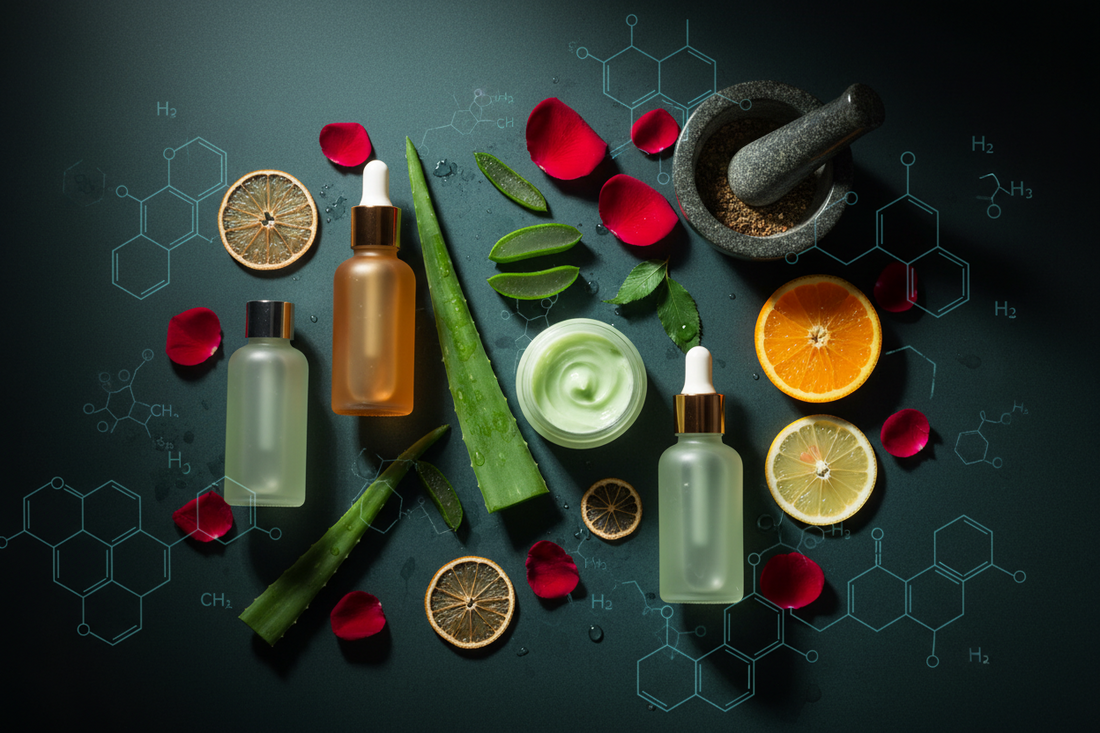
Water is dihydrogen monoxide. Vitamin C is ascorbic acid. Salt is sodium chloride. These are chemicals, full stop, and nobody is scared of them. The word "chemical" got hijacked by marketing teams to mean "scary lab thing" instead of what it actually means: matter with a defined composition. A rose is a chemical factory. So is your own skin.
So when a jar claims to contain no chemicals, what it's really trying to sell you is a feeling of safety, not a fact. That's a problem, because:
- Every cosmetic product, without exception, is composed of chemical compounds (the FDA and cosmetic chemists agree on this basic point, even while disagreeing on plenty else).
- "Natural" and "synthetic" aren't safety categories on their own. Poison ivy is natural. Saline solution is synthetic. What matters is the specific compound and how your skin responds to it.
- Regulatory bodies like the FDA do not have a legal definition for "contains no chemicals," "all-natural," or "clean" on cosmetic labels. Brands can print those words with zero standardized meaning behind them.
We're not telling you this to make you throw up your hands and stop caring what's in your products. We're telling you because the industry WANTS you confused. A confused customer trusts the label instead of reading the ingredient list. A confused customer pays extra for a marketing word.
We covered this same sleight of hand from a different angle in the clean beauty marketing myth, because "contains no chemicals" and "clean" are cousins. Same trick, different font.
So what should you actually be asking
Not "does this contain zero chemicals." Ask: is this bioidentical to what my skin already makes and recognizes?
That's the question our ancestors never had to ask, because they didn't have a choice between rendered animal fat and petroleum-derived synthetics. They used what was on hand: tallow, beeswax, plant oils. Nature's Wisdom First, because it was the only wisdom available.
Human sebum, the oil your own skin produces to moisturize and protect itself, is made up largely of triglycerides and fatty acids: oleic, palmitic, stearic. Rendered beef tallow has a strikingly similar fatty acid profile: oleic, stearic, palmitic, and linoleic acid in proportions close to what your skin already produces. That's not a marketing claim, it's basic lipid chemistry, and it's why tallow has a centuries-long track record as a skin salve across cultures that had cattle and common sense, long before "skincare industry" was even a phrase.
Compare that to a lot of modern lotions built on mineral oil (a petroleum byproduct) or seed oils high in linoleic acid ratios your skin didn't evolve around, then propped up with synthetic preservatives and fragrance to keep the whole unstable emulsion from going rancid on a shelf for two years. Neither of those is "full of chemicals" in some scary sense. They're just chemicals your skin has less history with.
We'll be honest, because that's the whole point of this post: bioidentical doesn't mean "works for everyone" or "fixes every skin issue." Some people with breakout-prone skin find heavier, more occlusive fats like tallow feel too rich, and the evidence on tallow and breakouts is genuinely mixed, not a slam dunk in either direction. If your skin is very oily or acne-prone, patch test first and see how it feels. Skincare that works with your skin, not against it, means paying attention to YOUR skin, not just trusting a jar because it has a cow on the label.
Reading a label like a natural rebel, not a marketing target
Skip the front of the bottle. That's advertising. Go straight to the ingredient list on the back, and ask three questions:
- Do I recognize most of these as things that exist in nature, not just a science-fiction name string?
- Is the fat or oil base something my skin's own chemistry resembles, or something purely engineered for shelf life and cost?
- Is it made without parabens, phthalates, and synthetic fragrance, stated as a formulation fact, not a "contains no chemicals" safety claim?
That third one matters. A brand can honestly tell you what it left out. No honest brand can tell you their product has zero chemicals in it, because that would mean the jar is empty.
The alternative that doesn't need a myth to sell itself
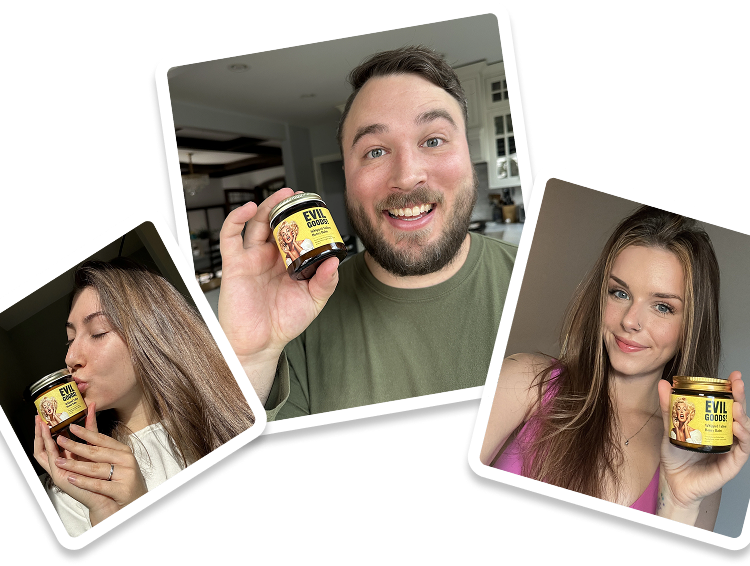
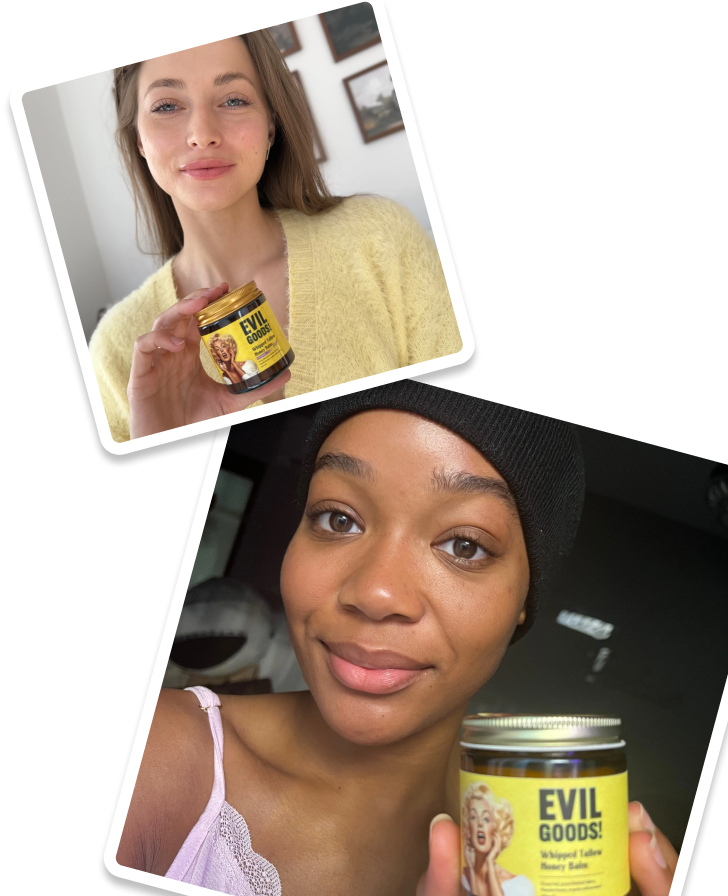
We built Evil Goods on a simple, boring, defensible idea: use ingredients bioidentical to what skin already makes, sourced from grass-fed cattle here in the USA, and skip the synthetic filler entirely. No fluff, just results our customers report back to us, one jar at a time. Our Whipped Beef Tallow Honey Skin Cream is made without parabens, without phthalates, without synthetic fragrance, because we can tell you exactly what's in it and why, not because we're claiming some mythical "zero chemicals" status nobody can actually deliver.
350k+ customers and a 4.9 star rating across 23k+ reviews later, people keep coming back not because we sold them a myth, but because we didn't need to.
Try it one time, or set it up on subscribe-and-save and never think about running out. Either way, you're backed by our 30-day money-back guarantee: if your skin doesn't love it, we don't keep your money. No drama, no hoops.
The skincare industry sells you fear and calls it "clean." We'd rather sell you the truth and let your skin decide.

Dr. Elena Dinkollari
MD, Dermatologist & Endocrinology Assistant

Doctor Approved