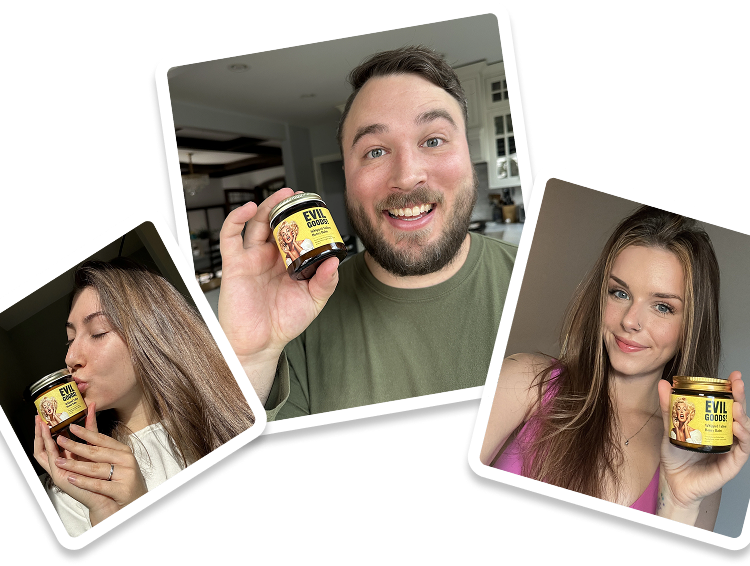
THE SKINCARE INDUSTRY IS LYING TO YOU. Not with chemicals you can't pronounce. With a word you've been trained to trust: clean.
The clean beauty marketing myth is one of the most profitable cons in modern retail. There is no legal definition of "clean" in skincare. Not in the US. Not in the EU. Not anywhere. Any brand can print it on a jar, charge you double, and walk away. And they do. Every single day.
This is part of a bigger story we're telling over at The Skincare Truth + Ancestral Living hub. Start there if you want the full picture. But right now, let's pull back the curtain on the word that's running your wallet dry.
What "Clean Beauty" Actually Means (Spoiler: Nothing)
Here's the direct answer, because you deserve it fast: "Clean beauty" is an unregulated marketing term. No government body defines it. No independent standard enforces it. Brands self-certify. Retailers set their own lists. One store's "clean" is another store's "banned ingredient." The word exists to create a feeling of safety, not to deliver it.
That's not a fringe opinion. That's the regulatory reality.
The FDA does not recognize "clean" as a defined cosmetic category. The EU has its own restricted substances list, but "clean beauty" as a label isn't tied to it. What you're buying when you buy "clean" is a vibe. A marketing department's best guess at what scared, health-conscious consumers want to hear.
And those consumers, people like you, deserve better than a vibe.
How the Con Works
Here's the playbook. It's not complicated, which is what makes it so effective.
Step 1: Pick a villain ingredient. It doesn't have to be dangerous. It just has to sound dangerous. Parabens. Sulfates. Silicones. Mineral oil. Take something that's been used safely for decades, strip all context, and turn it into a boogeyman.
Step 2: Remove the villain. Reformulate. Slap "free from" on the label. Now your product is "clean." You haven't necessarily made it better. You've made it marketable.
Step 3: Replace it with something that sounds natural. This is where it gets interesting. Many "clean" products swap out well-studied synthetic ingredients for poorly studied botanical ones. Some botanical extracts have legitimate sensitization rates. Some "natural" preservative systems are less effective than the ones they replaced, which creates its own problems. The swap isn't always an upgrade. It's always a story.
Step 4: Charge more. Because "clean" implies premium. Premium implies better. Better implies results. None of that chain is guaranteed. All of it is implied.
The result? You pay more. You feel virtuous. The brand wins. Your skin? It depends entirely on what's actually in the formula, not what the label calls it.
The Ingredient Story They Don't Want You Reading
Here's what's wild. While the clean beauty industry was busy demonizing petroleum byproducts and synthetic emulsifiers, it quietly ignored something your great-grandmother used without a second thought.
Beef tallow.
Rendered animal fat has been used to condition and protect skin for thousands of years. Ancient Egyptians used animal fats as part of their skincare and cosmetic practices. Roman physicians documented fat-based preparations for skin. This wasn't ignorance. This was empirical knowledge built across generations of lived experience. Tallow from grass-fed cattle is rich in fat-soluble vitamins A, D, E, and K, as well as conjugated linoleic acid (CLA) and oleic acid, one of the dominant fatty acids in human sebum. That structural similarity to your skin's own lipids is why so many customers report that tallow-based products feel like nothing else: no greasiness, no barrier, just skin that feels like itself again.
That's not a drug claim. It's a composition fact. And it's the kind of fact the clean beauty industry has zero incentive to tell you, because tallow costs less than a proprietary botanical complex and can't be trademarked.
"Natural" Doesn't Mean Safe. "Synthetic" Doesn't Mean Dangerous. And "Clean" Means Neither.
This is the nuance the manifesto brands don't want to sit with, but we will, because honesty is the whole point.
Some synthetic ingredients are genuinely useful and well-tolerated. Some natural ingredients cause real sensitization in real people. The binary of "clean = good, synthetic = bad" is as intellectually lazy as the marketing it replaced.
What your skin actually needs is ingredients that are compatible with it, that don't disrupt its barrier, that moisturize and nourish without loading it up with unnecessary fillers, fragrance, and stabilizers added to make a product feel luxurious on first contact in a store.
And here's where we'll be straight with you on something the hype won't: tallow isn't magic, and it isn't for everyone. If your skin is prone to breakouts, the evidence on tallow specifically is genuinely mixed. Some people with oily or acne-prone skin do great with it. Others find heavier occlusive ingredients aren't their match. We'd rather tell you that plainly than oversell you something that doesn't fit. What we can tell you is that for people dealing with dry, tight, rough-feeling skin, the customer-reported results are hard to argue with. 350,000+ customers. 4.9 stars. 23,000+ reviews. That's not a marketing department. That's people reporting back.
What an Actual Alternative Looks Like
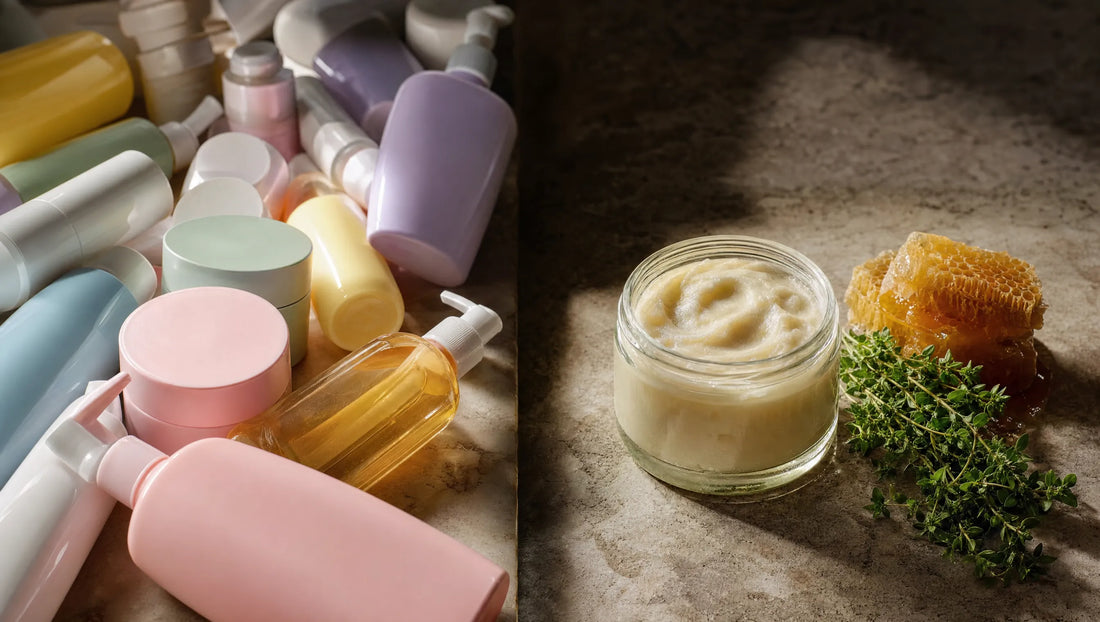
We make one thing: whipped beef tallow skin cream. Made in the USA. Made without synthetic fragrance, parabens, or petroleum fillers. The ingredient list is short enough to read in ten seconds.
We don't call it "clean." We call it simple. We call it ancestral. We call it what it is: rendered grass-fed beef tallow, combined with raw honey, and nothing your skin doesn't need.
No proprietary botanical complexes with clinical-sounding names. No "clean" badge purchased from a retailer's marketing team. Just an ingredient with thousands of years of use behind it, and a formula your skin can actually recognize.
You can read more about how tallow compares to modern moisturizer formulations in this post if you want to go deeper on the ingredient science.
The Rebellion Is Simple
THE NATURAL SKINCARE REBELLION isn't about rejecting science. It's about rejecting the performance of science. It's about asking: who defined "clean" here, and what do they get when you believe them?
The answer, almost always, is money.
Your skin doesn't care about the badge. It cares about what you put on it. So put something real on it.
Try the whipped tallow cream → one-time purchase or subscribe and save. Either way, you're covered by our 30-day money-back guarantee. No drama, no hoops. If it's not right for your skin, we make it right for you.

Dr. Elena Dinkollari
MD, Dermatologist & Endocrinology Assistant

Doctor Approved