The skincare industry sold you a lotion aisle full of water, silicone, and synthetic fragrance, and called it "moisture." Then it wondered why your skin is still tight, flaky, and screaming for help by 2pm. That's not moisture. That's a coat of paint.
Here's the direct answer: tallow for dry, flaky skin works because rendered beef tallow is rich in fatty acids and fat-soluble vitamins (A, D, E, K) that closely resemble the lipids already in human skin. It sits close to the skin's own oil (sebum) in composition, which is why it's absorbed differently than plant-oil or petroleum-based lotions and reported by many users to leave skin feeling less tight, softer, and deeply moisturized rather than sitting on top like a film. It's a traditional, bioidentical-style skincare ingredient, not a modern lab invention, so this is really your great-grandmother's skincare staple getting a rebrand. It's not a miracle and it's not for everyone (more on that honestly, below), but for classic dry-and-flaky skin, it's one of the most ancestral, straightforward options out there. Full guide here: Beef Tallow for Dry Skin →
Let's get into the actual guide, because "trust me" isn't how we do things around here.
Why does dry, flaky skin happen in the first place?
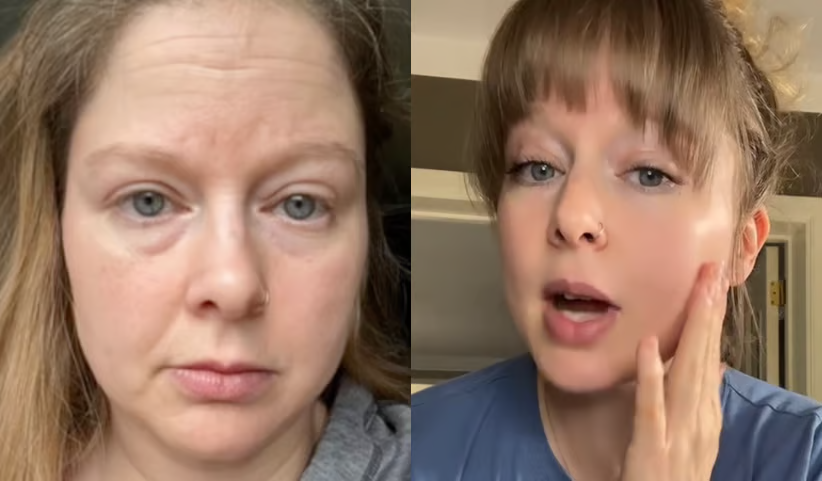
Flaky skin usually means one thing: your skin's outer barrier is losing water faster than it can replace it. That barrier is built from lipids, mostly fatty acids, cholesterol, and ceramides, arranged like bricks and mortar. When that mortar gets thin (harsh cleansers, hot showers, wind, low humidity, age), water escapes, cells pile up unevenly on the surface, and you get flakes.
The industry's answer for decades has been humectant-heavy lotions: water, glycerin, a splash of synthetic fragrance to make it "feel" luxurious. Humectants pull water in, which helps short-term, but if there's not enough fat to seal it, you're refilling a bucket with a hole in it. That's the part nobody tells you at the drugstore counter.
Does tallow for dry, flaky skin actually make a difference?
Here's the mechanism, plainly. Beef tallow is rendered fat, mostly oleic, stearic, palmitic, and linoleic fatty acids. Human sebum is made of a similar (though not identical) fatty acid profile. That closeness is why tallow is often described as "bioidentical-ish" to skin's own oils. It also carries fat-soluble vitamins A, D, E, and K, the same vitamins your skin already uses.
Practically, that means tallow-based balms tend to:
- Deeply moisturize dry-feeling skin instead of just sitting on the surface
- Help skin feel less tight after washing or in cold, dry air
- Soften rough, flaky patches over consistent use
- Condition skin without a synthetic-fragrance sting
We're not going to claim it works on any diagnosed skin condition, because it doesn't and it's not supposed to. It's a cosmetic. What it does is give dry skin the kind of fat-rich barrier support that our ancestors relied on for centuries, long before "12-step routines" were a marketing category.
Where does this actually come from? (A quick, honest history)
Tallow as a skin balm isn't new; it's just forgotten. Rendered animal fat was a staple skin salve across pre-industrial Europe and among American pioneers, used the way we'd use a jar of balm today: on hands, faces, chapped lips, cracked heels. It fell out of use in the 20th century not because it stopped working, but because petroleum byproducts (hello, mineral oil) and seed-oil-based synthetics were cheaper to mass-produce and easier to bottle at scale. Cheaper to make ≠ better for your skin. That's the part the industry would rather you not think about too hard.
Who is this actually good for, and who should skip it?
Honesty time, because we'd rather lose a sale than lie to you.
Likely a good fit if:
- Your skin is dry, flaky, tight, or rough (not oily or actively breakout-prone)
- You've tried lotion after lotion and feel like you're reapplying by lunch
- You want a short ingredient list you can actually pronounce
- You're drawn to ancestral, minimally processed formulas over lab-built ones
Skip it or patch-test carefully if:
- You have very oily or acne-prone skin. The evidence here is genuinely mixed: some people find rich, saturated-fat balms comedogenic on their skin, others don't react at all. Skin is individual. If you're breakout-prone, patch test on your jaw or forearm for a few days first.
- You have a known beef or animal-fat allergy (rare, but check labels).
- You're expecting this to address a diagnosed skin condition. This is a cosmetic moisturizer, made to comfort the feel of dry, sensitive-feeling skin, not a solution for any diagnosed condition. If you have one, talk to a dermatologist and use this as a comfort-focused moisturizer alongside their guidance, not instead of it.
That mixed-evidence honesty is on purpose. We'd rather tell you the truth than sell you a jar you'll return.
How is tallow different in winter vs. everyday dry patches?
Dry, flaky skin isn't one-size-fits-all in cause. Cold, low-humidity air strips moisture faster and calls for a heavier, more occlusive layer, which is its own conversation. If that's your main trigger, go deeper here: Tallow for Winter Skin →
If your flaky patches are more localized (elbows, knees, shins, the backs of hands), the approach and application frequency shifts too. We cover that specifically here: Tallow for Body Dry Patches →
How do you actually use tallow balm on dry, flaky skin?
No hoops here, just a routine:
- Cleanse gently. Skip anything foaming and harsh; it undoes the work before you've started.
- Apply to slightly damp skin. Locks in more surface water before it evaporates.
- Warm a small amount between your fingers first. Tallow balm softens with body heat, so a little spreads a long way.
- Use it where you're flaky, not everywhere. Cheeks, jawline, elbows, wherever skin is telling you it's tight.
- Give it a few weeks. Barrier support is cumulative, not instant. Consistency beats quantity.
Try it: our whipped tallow cream
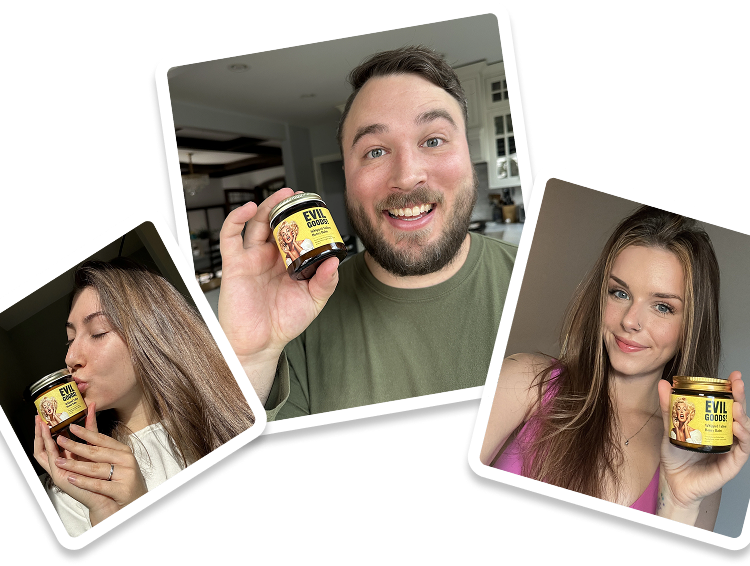
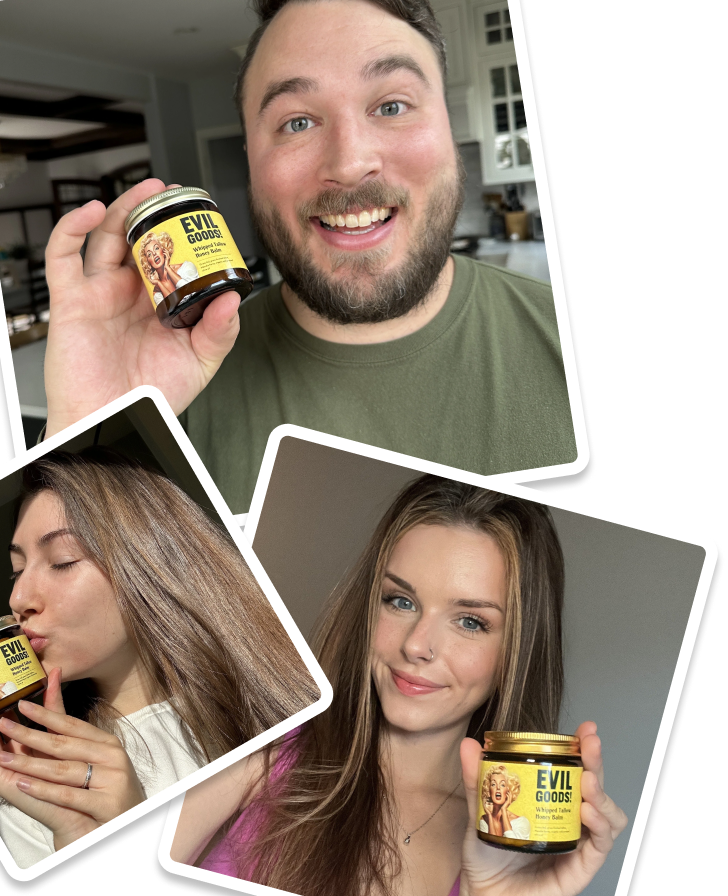
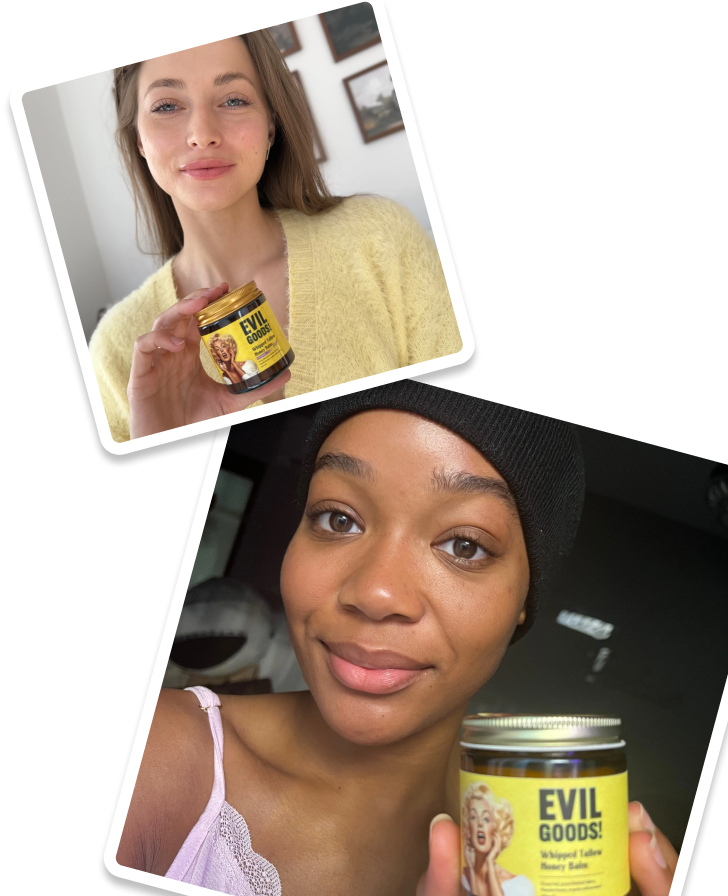
If you want to actually test this instead of just reading about it, our Whipped Beef Tallow & Honey Skin Cream is built specifically for dry, flaky, tight-feeling skin. It's whipped tallow blended with raw honey (a humectant that pulls moisture in, while the tallow seals it) for a nourishing, fast-absorbing feel without the synthetic-fragrance sting. Made in the USA, no fluff, just fat-rich, ancestral skincare doing what it's supposed to do.
You can grab it as a one-time purchase or set it up as subscribe-and-save if dry skin is a recurring problem in your house (it usually is). Either way, you're backed by our 30-day money-back guarantee. Try it. If your skin doesn't feel softer, calmer, and less tight, send it back. No drama, no hoops.
The skincare industry built an empire on lotions that never quite finish the job. Your ancestors didn't have that problem. Go back to what actually worked → see the full guide on beef tallow for dry skin.

Dr. Elena Dinkollari
MD, Dermatologist & Endocrinology Assistant

Doctor Approved